


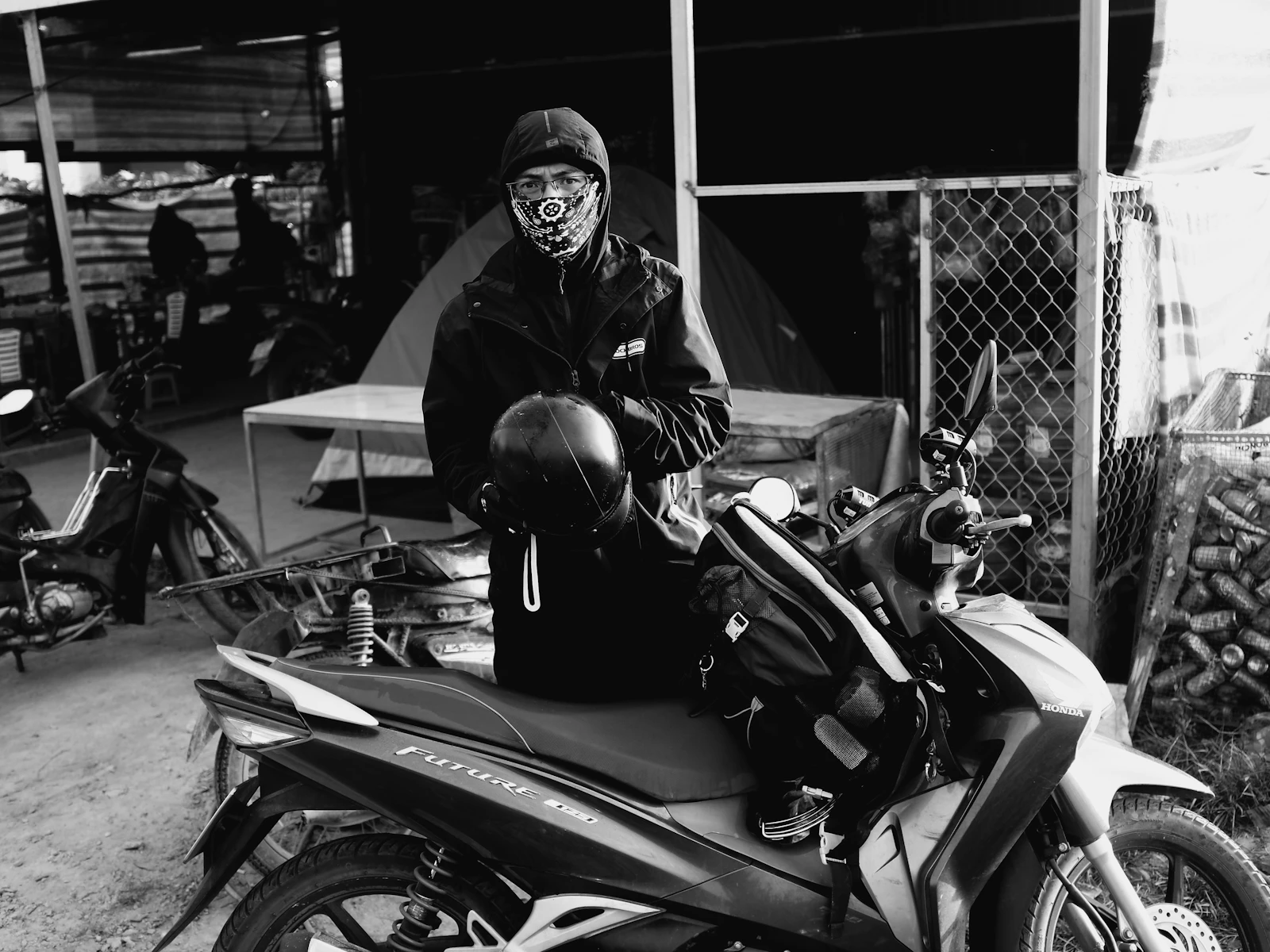
Choose a one-piece motorcycle rain suit if you prefer connected coverage with no separate jacket-to-pants overlap to manage. Choose a two-piece suit if separate garments make changing, sizing, and packing easier for you. In either case, judge the actual construction and fit over your riding equipment. The number of pieces does not guarantee that a suit will keep you dry.
For a commuter or touring rider, the useful comparison starts before the weather turns: can you put the suit on, close it properly, and sit comfortably on the motorcycle? A suit that fits while standing can pull at the knees, crotch, or shoulders once you reach the handlebars.
What changes between the two designs?
| Decision | One-piece | Two-piece |
|---|---|---|
| Waist coverage | Upper and lower sections are joined. | Check that jacket and pants overlap when seated. |
| Fit | Torso length and leg length must work together. | Separate sizing may be possible if pieces are sold individually. |
| Stops | Removing the top involves the connected suit. | The jacket can come off independently. |
| Packing | One garment to keep track of. | Two items that can be packed separately. |
Neither design is automatically quicker to put on or smaller to pack. Entry openings, lining, fabric bulk, and your boots can matter more than the label. Compare the packed dimensions and try the dressing sequence yourself instead of relying on a general promise.
Keep rain protection and crash protection separate
This comparison concerns rain shells worn with protective riding equipment. Do not assume a lightweight rain suit replaces abrasion-resistant motorcycle clothing or impact protectors. The Motorcycle Safety Foundation’s protective-gear guidance recommends leather or abrasion-resistant clothing for riding and discusses rain suits separately for weather protection.
If a garment claims to provide both functions, check its documentation rather than inferring protection from thickness, price, or the word “motorcycle.” Keep your usual protective outfit on when testing the rain suit. For cooler trips, our fall motorcycle gear layering guide explains how to plan the layers underneath.
Run a practical fit test before keeping either suit
- Dress for your real ride. Wear the jacket, pants, and boots you intend to use. Consult the rain suit’s sizing instructions; do not automatically add a size.
- Test the entry. Check whether the leg openings pass over your boots without forcing the fabric or zipper. If boot removal is necessary, decide whether that is practical at your planned stops.
- Sit in riding position. With the bike securely supported and engine off, reach toward the controls and bend your knees. Check for pulling at the shoulders, seat, and crotch.
- Check the interfaces. Inspect collar, wrists, waist, and ankles. On a two-piece suit, confirm the overlap remains in place when leaning forward. Follow the manufacturer’s instructions for arranging cuffs with gloves and boots.
- Close and adjust it fully. Make sure you can use every fastening and that excess material or loose straps do not interfere with the motorcycle.
Use the ZARROE size guide alongside the individual product’s measurements. If a one-piece suit fits your chest but pulls through the torso, a different cut may be more suitable than simply choosing a larger size. If buying a two-piece set, confirm whether one size applies to both garments.
Look beyond “waterproof” in the product title
Read how the seams and main closure are protected. Check whether the listing describes seam sealing, a storm flap or another weather-resistant closure, and adjustment at exposed openings. Then look for the manufacturer’s care instructions and any stated test information.
MSF’s rain-suit guidance highlights a close-fitting collar, covered front opening, and secure cuffs. Its advice also favors high-visibility colors. Check the outermost layer: a rain suit covers much of the riding clothing beneath it.
A one-piece suit removes the separate waist overlap, but it still has entry closures, seams, and openings. A two-piece suit needs a suitable overlap, but that alone does not establish how it performs in rain. For terminology, see our waterproof versus water-resistant jacket guide.
Compare ZARROE’s one-piece and two-piece options
Both listings below use the ZYVOR Dry name, so check the construction in the description before ordering. These are listed features, not results from an independent wear test.
The one-piece ZYVOR Dry Rain Suit listing describes a connected suit with a full-length front zipper, storm flap, seam-sealed construction, adjustable waist tabs, and reflective panels. When comparing its fit, pay particular attention to the torso length over your regular jacket.
The two-piece ZYVOR Dry Rain Suit listing describes separate jacket and pants, an adjustable pant waist, seam-sealed construction, fluorescent yellow panels, and reflective trim. Check the jacket-to-pants overlap and confirm the sizing arrangement for the set.
Neither description establishes an abrasion or impact-protection rating. Choose your protective layers separately, and ask about any missing specification before purchasing. You can compare the available suit and jacket formats in ZARROE’s motorcycle rain gear collection.
Choose around your stops, not just the forecast
For regular commuting: Give changing convenience extra weight. Try removing the wet outer garments without putting their outside surfaces against your work clothes. A two-piece set may suit this routine, especially if you prefer to remove the jacket first.
For longer touring days: Compare both designs in your seated position and luggage. A one-piece suit is worth considering if connected coverage is your priority, but only if getting into it and taking breaks are manageable.
For occasional backup use: Pack the complete suit and practice putting it on before the trip. Keep it accessible so you can stop somewhere safe and sheltered to dress before conditions worsen. Do not wait until a roadside emergency to discover that a leg opening will not pass over your boot.
Before you buy
- Confirm whether the listing is a complete suit or a jacket only.
- Check sizing over your full riding outfit.
- Test entry openings, seated movement, and all closures.
- Read the seam, visibility, and care details.
- Compare packed size and the return policy.
- Choose the format you can comfortably put on and use.
 New Arrivals
 New Arrivals