


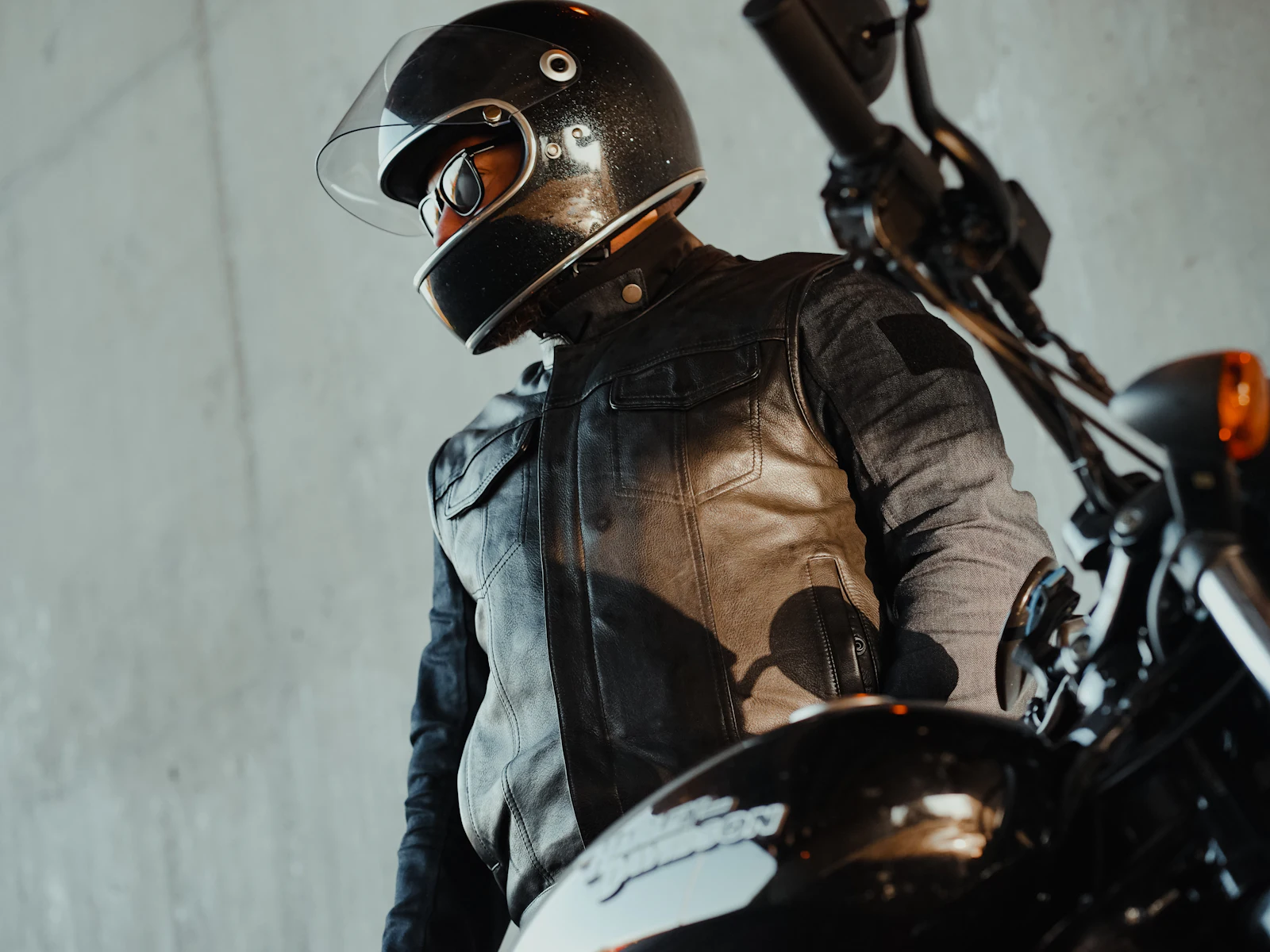
Replace a motorcycle jacket when its protective construction is damaged beyond an approved repair, it can no longer close or fit correctly, or its manufacturer’s replacement instructions require it. After a crash, stop using it until you have followed the maker’s inspection and replacement guidance. Age alone cannot tell you whether a particular jacket is ready for another ride.
A faded finish and a split shoulder seam call for different decisions. Before buying another jacket, separate cosmetic wear, serviceable components, and damage that could compromise protection. This inspection guide helps you decide what to check and what to ask the manufacturer; it cannot certify a used jacket as safe.
Start with the jacket’s history
Find the model name, care label, protective markings, and original instructions. Note any crashes, sliding contact, repairs, chemical spills, prolonged damp storage, or unusually high heat exposure. Tell the manufacturer about these events even if the jacket now looks normal.
Do not apply a blanket five-year or ten-year replacement rule to every motorcycle jacket. Follow any service-life limit specified for your actual garment and its protectors. A lightly used jacket with a known history presents a different question from a secondhand jacket whose crash and storage history cannot be established.
Inspect the shell, seams, and closures
With the jacket clean and dry, examine it in good light, inside and out. Look closely at shoulders, elbows, forearms, side seams, and the main zipper. These checks are reasons to seek advice, not a home test of abrasion resistance.
- Shell: Look for holes, torn mesh, deep cuts, heavily scraped areas, cracking, or material that is flaking or breaking down.
- Seams: Check for opened joins, missing stitching, and fabric pulling away from the seam. Inspect the inside where accessible.
- Closures: Close the main zipper fully. Check whether it separates, whether teeth are missing, and whether cuff and waist fasteners still hold.
- Armor pockets: Look for tears, failed closures, or stretching that lets an insert move out of position.
Alpinestars’ motorcycle jacket maintenance guidance specifically calls for inspection of seams, zipper sliders, fasteners, and armor pockets, with damaged components replaced promptly. Its post-crash advice is to inspect carefully and replace the jacket if there is doubt. Use your own jacket manufacturer’s instructions for the final decision.
After a crash, appearance is not enough
Take the jacket out of service after a crash while you assess the next step. Photograph the contact areas and send the maker the model details and a clear description of what happened. Ask whether an inspection or an authorized repair is available, and whether the garment or individual protectors must be replaced.
A jacket that has no obvious hole may still need attention. Conversely, a replacement decision should follow the actual garment’s condition and instructions, rather than a guess based on the speed of the incident. If you cannot resolve a concern about protective performance, choose replacement rather than treating uncertainty as reassurance.
Keep airbag equipment on its own service path. If your jacket contains or accommodates an airbag system, follow that system’s deployment, inspection, and servicing instructions before riding again. Replacing a cartridge or an outer garment is not automatically the entire procedure.
Check the armor separately
Remove inserts only if the garment instructions allow it. Check each protector’s markings, shape, condition, and fit in its pocket. A sound outer jacket does not make a cracked or damaged insert acceptable. Likewise, new armor does not repair a worn-through shell.
For example, D3O’s consumer care instructions tell users to inspect protectors before use and replace them when necessary. They also require replacement after significant blunt impact. That guidance applies to D3O products; check the instructions for the brand and model installed in your jacket.
When replacing an insert, confirm the approved type, dimensions, orientation, and intended body location. Do not trim a protector or force it into an unsuitable pocket. For the difference between garment construction and impact protection, read our motorcycle jacket safety features guide.
Recheck fit before blaming age
Try the jacket with the layers you actually wear and sit in your normal riding position. Reach toward the handlebars, bend your elbows, and check the sleeves, hem, and closures. Confirm that the armor sits over the intended areas and remains there as you move.
A change in body size, different underlayers, or a switch from an upright cruiser to a forward-leaning bike can change the fit you need. If the jacket cannot close comfortably or its adjusters cannot keep the armor positioned correctly, reassess the size or cut. Our motorcycle jacket fit and sizing guide can help you check the replacement before keeping it.
Repair, maintain, or replace?
Maintain: Dirt, ordinary odor, and a dull finish are reasons to consult the care label, not automatic reasons to buy a new jacket. Use our leather motorcycle jacket care guide for routine care, with the garment’s own instructions taking priority. Cleaning cannot restore missing material or certify crash-damaged gear.
Ask about repair: A worn fastener or damaged component may be serviceable. Before authorizing work, ask the manufacturer whether the proposed repair is suitable for protective motorcycle clothing. A neat-looking patch or ordinary tailoring repair is not evidence that the original protective performance has been restored.
Replace: Choose a replacement when the maker advises it, an approved repair is unavailable or unsuitable, or you cannot restore the required fit and closure. Compare the repair cost, shipping, and time without usable gear against a correctly specified replacement.
Choose the replacement for your actual riding
Write down what your current jacket gets wrong before shopping: slipping elbow armor, restrictive shoulders, inadequate ventilation, or too little room for your usual layers. Use those observations to make a practical shortlist.
Compare ZARROE men’s motorcycle jackets and ZARROE women’s motorcycle jackets by the details shown on each product page. Check the size chart, material, included protectors, available adjustment, and documented protective claims. Do not assume every jacket in a collection has identical armor or certification. Ask for clarification wherever a specification is missing.
Before your next ride
- Read the instructions for the jacket and each protector.
- Resolve crash-related concerns before using the gear again.
- Check shell, seams, closures, and armor pockets.
- Confirm protector position while seated on the bike.
- Use manufacturer-approved repairs and compatible replacement parts.
- Replace gear when its condition or instructions call for it.
 New Arrivals
 New Arrivals