


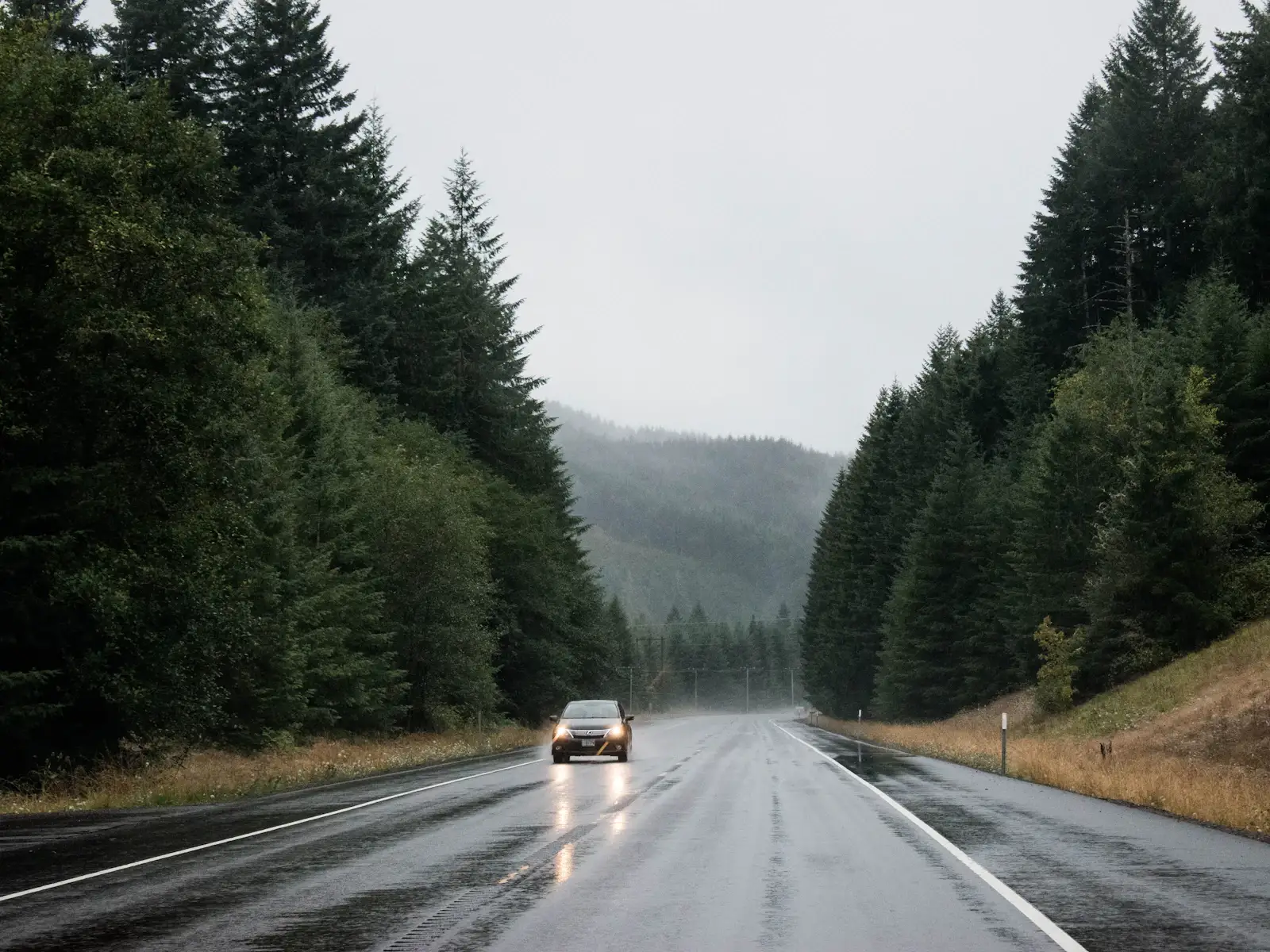
A water-resistant motorcycle jacket can handle limited moisture, but the label alone does not establish protection for a long ride in rain. For planned wet-weather riding, look for a clearly specified waterproof system, protected seams and closures, and a fit that works with your riding equipment.
The important question is not whether water beads on a new jacket. It is where the waterproof barrier sits, what the manufacturer says the complete garment can do, and how you will use it on your commute or tour.
Waterproof, water-resistant, and water-repellent: the difference
Water-resistant: check the limits
Treat “water-resistant” as a reason to ask more questions, not as a promise of all-day rain protection. Read the intended use and construction details. If a listing mentions only resistance to light showers, plan a separate rain layer for a trip where sustained rain is possible.
Water-repellent: a surface treatment
A durable water-repellent finish, commonly called DWR, helps droplets roll off the outer fabric. It is different from the waterproof barrier beneath it. GORE-TEX explains that DWR affects surface wetting; its waterproof membrane can still work when the outer textile becomes saturated.
Water beading is therefore not proof that an entire jacket is waterproof. Equally, a darkened, wet outer fabric does not by itself prove that the membrane has failed.
Waterproof: look beyond the main fabric
Look for an explicit waterproof claim for the garment, then check how the seams, front opening, vents, and pockets are handled. Ask whether any pockets are outside the waterproof barrier. A fabric specification cannot answer every question about a finished jacket.
Find out where the waterproof layer sits
Two jackets can both be sold for wet weather while asking you to manage them differently. Before buying, identify the arrangement rather than relying on “all-season” in the name.
A fixed waterproof layer
A fixed barrier stays with the jacket, so there is no separate liner to remember. Check whether it is bonded to the shell or sits inside it, and whether the manufacturer specifies any rain-related vent settings. Do not assume every fixed-membrane jacket has the same construction.
A removable waterproof liner
This arrangement gives you another piece to install, remove, and store. A thermal liner and a waterproof liner are not automatically the same item. Confirm which one is included and how it fastens.
Placement is model-specific. For example, REV’IT! explicitly describes the Offtrack 2 H2O waterproof liner as wearable over its shell. That is a documented feature of that model, not permission to wear every jacket liner on the outside. Follow your own garment’s instructions.
A separate rain overjacket
A packable rain layer may suit riders who already own a protective jacket and want a weather layer they can put on at a stop. Verify that it is intended and sized for that use. Allow space in your luggage for rain pants as well; a dry upper body does not solve exposed lower-body coverage.
Compare the current options in ZARROE’s rain gear collection, reading each item’s details rather than assuming every shell has identical features.
Five checks before you buy
- Read the actual waterproof claim. Identify whether it describes the outer shell, a removable liner, or the complete garment. If a numerical rating is given, ask what was tested and which test method was used.
- Check seams and the front closure. Look for seam-sealing information and instructions for storm flaps or protective closures. A zipper brand name alone does not establish waterproofness.
- Test the cuffs, collar, and hem. Wear your usual layers and gloves. Close the jacket fully and take your riding position while stationary. Confirm that the overlap with pants remains comfortable and covered.
- Check pocket specifications separately. Do not assume every pocket is waterproof because the jacket is. Use a separate waterproof pouch for items that must remain dry.
- Read the care and return information. Confirm how the garment should be cleaned, how any water-repellent treatment is maintained, and what support is available if it leaks.
The ZARROE ZYVOR Ultra X Rain Jacket currently lists a waterproof technical polyester shell, DWR finish, fully seam-sealed construction, a hidden storm flap, and adjustable cuffs and hem. These are useful details to compare. The listing does not supply a numerical waterproof test rating, so do not assign one to it or infer a particular duration of rain protection.
Use the ZARROE size guide alongside the individual product information, and confirm sizing with the layers you intend to wear. “Buy one size larger” is not a reliable rule across different designs.
Keep weather protection separate from crash protection
A rain shell’s waterproof features do not establish abrasion resistance or impact protection. The Motorcycle Safety Foundation’s protective-gear guidance treats rainwear alongside protective riding clothing, gloves, boots, and a suitable helmet. Keep your protective equipment in place when adding a weather layer.
Check the individual jacket’s protective construction and any stated certification separately. Our motorcycle jacket safety features guide covers the buying checks beyond weather protection.
What if your jacket feels wet inside?
Start by noting where and when you feel moisture: around the collar, along a closure, in a pocket, or generally across the lining. Record which vents were open and which layers you wore. This gives the manufacturer more useful information than simply saying the jacket is not waterproof.
Do not diagnose a failed membrane from a damp feeling alone. Surface wetting, moisture inside the garment, and water entering at an opening are different possibilities. Check the closures and care label, then contact the manufacturer if the problem continues. Avoid applying sealants or treatments that are not approved for that garment.
For GORE-TEX clothing, the brand explains that DWR can need reactivation or renewal when water stops beading. That is not a universal washing or heating instruction for every motorcycle jacket. Use the instructions for your exact product.
Choose for the ride, then plan your stop
For occasional showers, a suitable packable rain layer can be a practical addition to existing riding gear. For regular wet commutes, compare the convenience of a fixed waterproof system with the storage and changing routine of separate rainwear. On a longer tour, include the time and space needed to dry and repack your equipment.
Put rainwear somewhere accessible and stop safely before changing layers. For trips that also involve cool starts and warmer afternoons, see our fall motorcycle gear layering guide.
Choose the setup whose construction, fit, and care requirements you understand. Clear specifications and a manageable routine are more useful than an impressive weatherproof label on its own.
 New Arrivals
 New Arrivals