


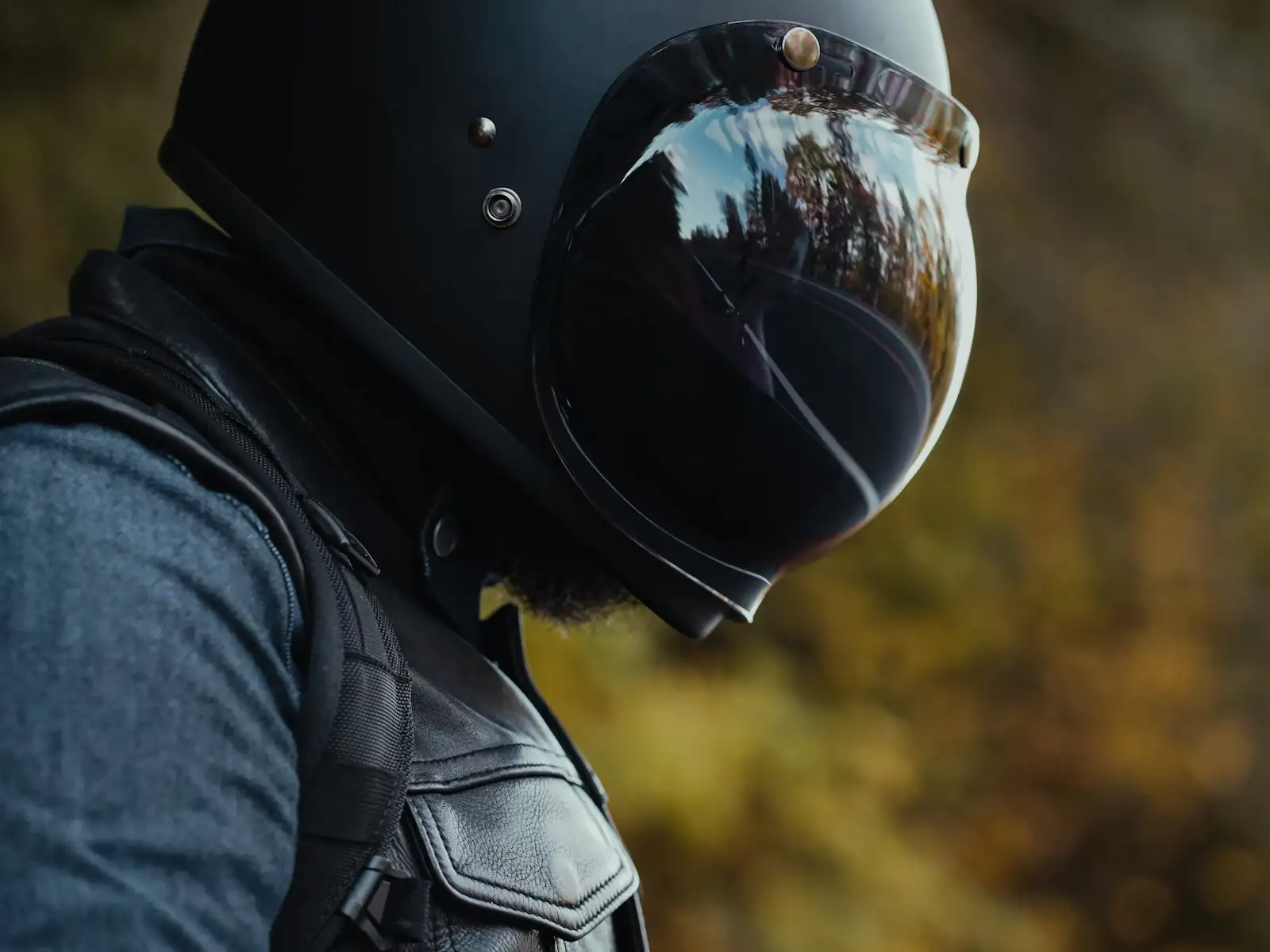
Short answer: you can wear a motorcycle vest over a jacket when the vest is sized for that exact jacket, closes without compressing your chest or shoulders, and does not restrict steering or interfere with protective equipment. The jacket should fit correctly first. A vest is an additional layer, not a substitute for full protective coverage.
Riders wear leather or denim vests over jackets for club identity, patches, storage, style, or an extra torso layer. The combination can work well, but only if both garments remain stable in a seated riding position. A vest that looks right while standing may pull across the back, press on the collar, or ride up once your arms reach the handlebars.
Fit the Motorcycle Jacket First
Start with the garment responsible for your main riding coverage. The jacket must fit your shoulders, elbows, chest, waist, and riding posture before you add a vest. If the jacket contains armor, confirm that it remains correctly positioned and that its closures work without the vest.
The National Highway Traffic Safety Administration recommends covering the arms and legs and wearing protective clothing for motorcycle riding. A sleeveless vest does not provide the same arm coverage as a durable long-sleeved jacket. Review our motorcycle jacket safety-feature guide before treating any outer layer as riding equipment.
Measure Over the Jacket You Will Actually Wear
Do not choose the vest from your T-shirt chest measurement if you intend to wear it over a jacket. Put on the jacket, close it completely, and measure around the fullest part of the layered chest. Keep the tape level and comfortably snug. Compare that measurement with the vest’s specific size chart and confirm whether the chart lists body measurements or finished garment measurements.
There is no dependable rule that every rider should buy one or two sizes larger. Jacket thickness, vest cut, leather stiffness, side-lace adjustment, and manufacturer grading all affect the result. Use the ZARROE size guide as a starting point, then check the individual product information or contact support when the layered measurement falls between sizes.
Layered vest fit test
- Wear the exact jacket and mid-layer planned for the ride.
- Close the jacket and vest completely.
- Sit on the motorcycle and reach both controls naturally.
- Turn your head and move both shoulders through their normal range.
- Check for pressure at the collar, armholes, chest, and lower back.
- Confirm that the vest does not move the jacket or its armor.
Check the Armholes and Shoulder Line
Armholes are often the first problem when a vest is layered over a substantial jacket. They need enough room for the jacket sleeves and shoulder construction without cutting into the front of the shoulder. At the same time, they should not be so large that the vest twists or catches excessive wind.
The vest shoulder should sit flat rather than bunching on top of the jacket. If the vest forces the jacket collar upward, pulls the sleeves, or makes the shoulder area feel compressed, the pairing is not suitable even if the front closes.
Make Sure the Closure Stays Secure
Zip or snap the vest fully during the fit test. The front should lie flat without strain lines, gaping snaps, or a zipper that is difficult to start. Check that pockets remain usable and that their contents do not press against the jacket or your body.
Side-lace designs can provide useful adjustment, but the lacing must remain secure and tidy. Loose cords, decorative chains, and long straps should not be able to flap toward controls, wheels, or hot motorcycle components.
Choose the Vest Material for Its Real Job
Leather vests provide structure, traditional motorcycle styling, and a stable surface for patches. They can feel restrictive over a thick jacket if the cut is too close. Compare ZARROE’s men’s leather motorcycle vests and women’s leather vests by cut, closure, and adjustment rather than appearance alone.
Denim vests are generally lighter and may soften more easily around a jacket, but material weight and construction vary. Browse men’s denim motorcycle vests when a less structured outer layer is preferred.
Club-style vests often prioritize clean patch panels, pockets, and a close silhouette. If the vest will carry large patches, place them before making final fit judgments because added layers and stitching can alter flexibility. The motorcycle club vest culture guide explains patch placement and club considerations in more detail.
Consider Visibility Before Adding Patches
The Motorcycle Safety Foundation notes that bright and retroreflective garments can improve a rider’s visibility, especially at night. A dark vest worn over a jacket may cover reflective panels that were intended to remain visible. Check the front, back, and sides of the complete outfit in low light before riding.
Do not cover ventilation openings, adjustment straps, airbag indicators, or other functional parts of the jacket with patches or vest hardware. If the jacket is used with an airbag system, follow the airbag manufacturer’s compatibility instructions rather than assuming an additional vest is acceptable.
Decide Whether You Need One Fit or Two
A vest sized to fit over a thick winter jacket may look loose over a T-shirt, while a close summer fit may not layer over anything substantial. If you regularly wear the vest both ways, choose an adjustable design or accept that one garment may not provide an ideal fit in both configurations.
Start with ZARROE’s men’s club-style vests or the broader men’s motorcycle vest collection. Evaluate every product separately, since cuts, side adjustment, pocket layouts, and measurements differ.
Bottom line: wearing a motorcycle vest over a jacket can be comfortable and practical when the jacket fits correctly first and the vest is measured for the complete layered setup. Test it seated on the bike, keep every closure secure, preserve movement and visibility, and never assume the vest replaces full protective riding coverage.
 New Arrivals
 New Arrivals