


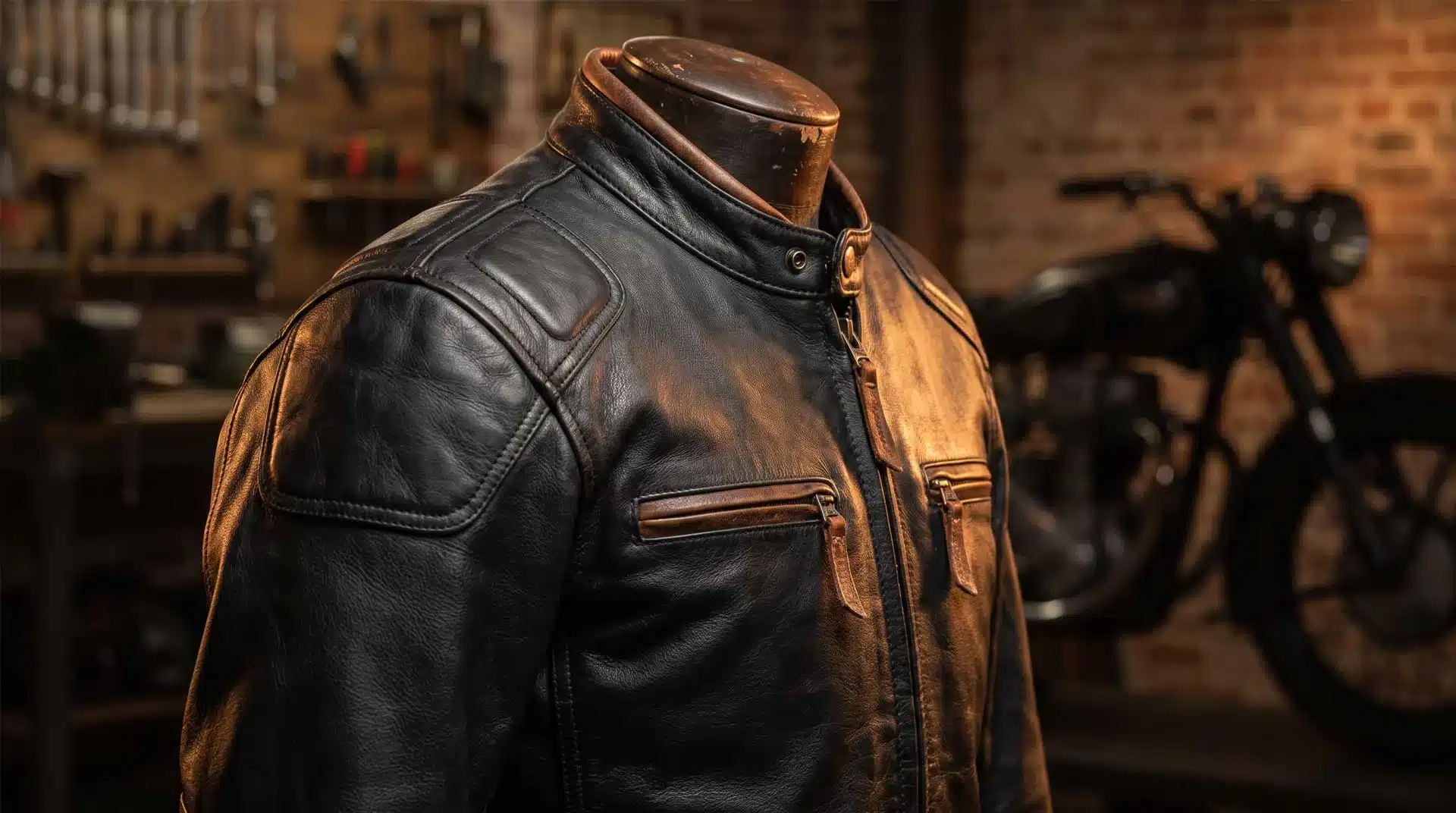
How to Choose a Motorcycle Jacket: The Complete Buying & Fit Guide
A motorcycle jacket is the one piece of riding gear you’ll wear every single time you throw a leg over the bike. Get it right and you’ll forget you’re even wearing it. Get it wrong — too tight in the shoulders, too loose in the back, no real armor underneath — and you’ll notice it on every ride, or worse, in a fall.
This guide walks through everything that actually matters when buying a motorcycle jacket: material, protection, fit, and style — in that order of importance.
Quick Answer
The right motorcycle jacket comes down to four decisions: material (leather for durability and abrasion resistance, textile for weather versatility, mesh for hot climates), armor (CE-rated shoulder, elbow, and back protection at minimum), fit (snug through the shoulders and torso with full arm mobility, not sized like streetwear), and riding style (a cafe racer jacket and a touring jacket are built for very different rides). Get those four right and everything else — color, styling, price — is personal preference.
Step 1: Pick the Right Material
Leather Motorcycle Jackets
Leather is still the benchmark for abrasion resistance in a slide, and it ages better than almost any other material — a well-cared-for leather jacket looks better at year five than year one.
- Cowhide — the most common choice. Thick, durable, and the best balance of protection and cost.
- Goatskin — lighter and more supple than cowhide, with a softer break-in period, but slightly less abrasion-resistant.
- Sheepskin/Lambskin — the softest and lightest option, favored for fashion-forward and bomber-style jackets. Less abrasion resistance, best suited to casual riding rather than long highway miles.
- Suede — a napped, unfinished leather with a distinct look. Comparable protection to standard leather but needs more careful maintenance since it stains more easily.
Best for: riders who want maximum durability, a jacket that improves with age, and classic style (cruiser, cafe racer, club styles).
Textile Motorcycle Jackets
Textile jackets use technical fabrics (often ballistic nylon or similar woven synthetics) and are built for versatility — many include removable waterproof and thermal liners so one jacket covers three seasons.
Best for: touring and commuting riders who deal with unpredictable weather and want adjustable warmth without owning multiple jackets.
Mesh Motorcycle Jackets
Mesh (or perforated leather/textile) prioritizes airflow above all else, which matters more than people expect — overheating on a bike is a real safety issue, not just a comfort one.
Best for: hot-climate and summer riders. Usually paired with a separate rain layer since mesh offers little weather protection on its own.
The honest trade-off: leather wins on abrasion resistance and longevity, textile wins on weather adaptability, mesh wins on hot-weather comfort. Most serious riders eventually own more than one.
Step 2: Understand Armor and CE Ratings — Don’t Skip This
This is the part shoppers skip and shouldn’t. A jacket’s leather or fabric is only half the protection story — the armor inside it does the real work in an impact.
CE (Conformité Européenne) certification is the standard used to rate motorcycle armor and garments in Europe, and it’s become the de facto global benchmark riders look for:
- Level 1 (CE 1) — armor that passes a baseline impact-absorption test. Adequate, but the minimum.
- Level 2 (CE 2) — absorbs roughly half the impact force of Level 1 armor. This is what most experienced riders recommend as the floor for shoulder, elbow, and back protectors.
- Garment-level ratings (AA / A) apply to the whole jacket (abrasion resistance, seam strength, armor), separate from the armor-piece rating above.
What to check before buying:
- Does the jacket include armor, or just pockets for armor you buy separately? (Check the product description — this varies a lot between brands.)
- What CE level is the shoulder/elbow armor?
- Is there a back protector included, or only a pocket for one? A back protector is frequently sold separately and is worth adding even if it isn’t included.
A jacket that looks great but has no real armor is a costume, not riding gear. If protection is a priority, prioritize CE-rated armor over leather thickness or styling every time.
Step 3: Get the Fit Right
Motorcycle jacket fit is not the same as regular jacket fit, and this is where most first-time buyers get it wrong by ordering their usual clothing size.
A properly fitted motorcycle jacket should:
- Sit snug through the shoulders and chest with almost no excess fabric — loose fabric flaps at speed and shifts armor out of position in a slide.
- Allow full range of motion in the arms when you mimic a riding position (arms bent forward, gripping imaginary bars) — not just standing straight, which is how most people try jackets on.
- Have sleeves that reach your wrist even with your arms extended forward, so they don’t ride up on the bike.
- Sit slightly longer in the back than the front, so it doesn’t expose your lower back when you lean forward.
- Feel snug when you first try it on — leather in particular stretches and molds to your body over the first several wears.
Sizing tips:
- Always check the brand’s specific measurement chart (chest, shoulder, arm length) rather than assuming your usual size — sizing varies significantly between brands, and even between styles from the same brand.
- If you’re between sizes, size up for a jacket you’ll wear over layers in cold weather, and size down (or true to size) for a close-fitting sport or cafe racer cut.
- Buy leather slightly snug, not loose — it will relax; the reverse won’t happen.
Step 4: Match the Jacket to Your Riding Style
| Jacket Style | Best For | Typical Fit |
|---|---|---|
| Cafe Racer | Sport/retro riders, upright-to-forward posture | Slim, fitted through the torso |
| Cruiser | Long, relaxed highway miles | Roomier cut, built to move with a laid-back seating position |
| Bomber | Casual/street riders wanting classic styling | Relaxed, streetwear-adjacent |
| Touring | Multi-day rides, mixed weather | Room for layering, often with liners |
| Adventure/Textile | Mixed on/off-road, unpredictable weather | Room for armor + layering, longer cut |
| Club/Cut Style | Club members, identity-focused riders | Often vest-based; fit prioritizes patch/back panel space |
A jacket built for one riding position genuinely doesn’t work well for another — a slim cafe racer cut will bind up and ride high on a cruiser’s laid-back seating position, and a roomy touring jacket will flap and catch wind on a sportier bike.
Step 5: Men’s vs. Women’s Fit
Women’s motorcycle jackets aren’t simply smaller versions of men’s jackets — they’re cut differently through the shoulders, bust, and waist to account for a different body shape and to keep armor correctly positioned. A woman riding in a men’s jacket sized down often ends up with armor sitting in the wrong place and excess fabric at the waist. If a brand offers a true women’s-specific cut, it’s almost always the better-fitting choice over a resized unisex jacket.
How Much Should You Spend?
Price generally tracks material quality and armor spec, not brand hype:
- Budget (under $150): Entry-level textile or lower-grade leather, often with basic or no armor. Fine for occasional, short-distance riders on a budget.
- Mid-range ($150–$400): Full-grain leather or quality textile, CE Level 1–2 armor included, solid stitching and hardware. This is where most serious riders land.
- Premium ($400+): Top-grain/select leather, race-derived armor, weatherproofing tech, and refined construction details. Worth it for high-mileage riders and those wanting the jacket to last a decade-plus.
Spend where it matters most: armor and stitching quality first, styling second.
Frequently Asked Questions
Do motorcycle jackets need armor? Not legally in most places, but functionally, yes. A jacket without armor offers abrasion resistance but little impact protection for your shoulders, elbows, and spine. Any jacket marketed for riding (versus pure fashion) should at minimum have pockets for armor, and ideally come with CE-rated armor included.
What’s the difference between CE Level 1 and Level 2 armor? Level 2 armor absorbs significantly more impact force than Level 1 while typically being thinner — it’s the higher protection standard and the level most experienced riders recommend for shoulder, elbow, and back protection.
Should I buy a motorcycle jacket a size up or true to size? True to size or slightly snug for leather, since it stretches and molds to your body with wear. Textile jackets you plan to layer under (winter riding) can be sized up slightly to accommodate a liner or extra layers.
Is leather or textile better for motorcycle jackets? Leather offers better abrasion resistance and ages better over time; textile offers better weather adaptability and is often lighter. Riders doing long-distance, mixed-weather touring often prefer textile; riders prioritizing classic style and durability often prefer leather.
How do I know if a motorcycle jacket fits correctly? Try it on and mimic your actual riding position — leaned forward, arms bent as if gripping handlebars — rather than just standing straight. The jacket should stay snug through the shoulders with no excess fabric, sleeves should still cover your wrists, and you should have full mobility in your arms and shoulders.
Looking for a jacket built around real armor, true-to-size fit charts, and premium leather? Browse ZARROE’s men’s and women’s motorcycle jacket collections, or use our size guide to find your fit before you buy.
 New Arrivals
 New Arrivals