


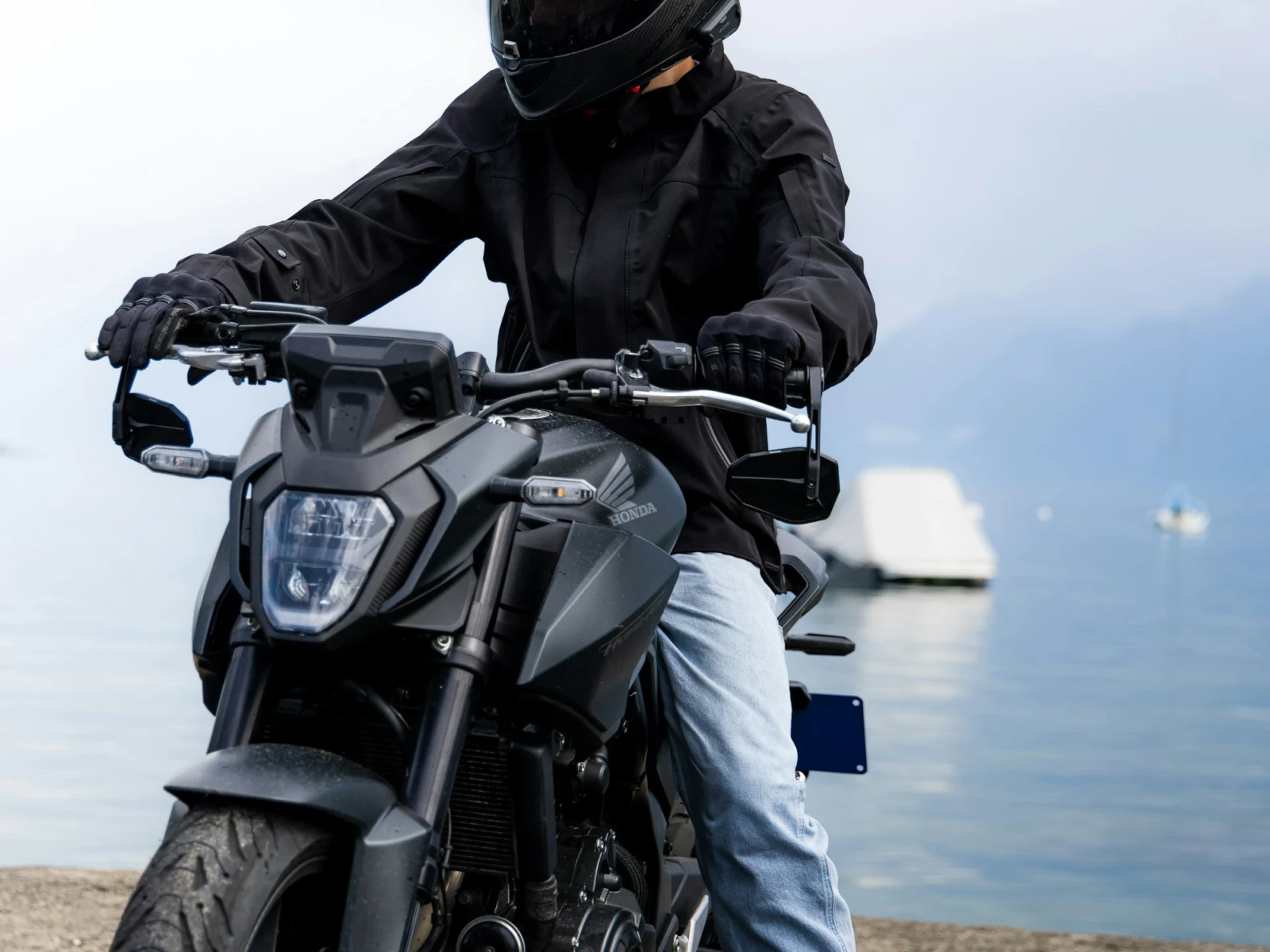
An adventure motorcycle jacket is usually optimized for active, mixed-surface riding, while a touring jacket prioritizes long-distance road comfort and weather management. The categories overlap, so the best choice depends less on the label and more on how you ride, how much ventilation you need, and whether the jacket’s weather system works for your trips.
Both styles should start with the same fundamentals: motorcycle-specific construction, abrasion-resistant material, secure closures, useful coverage, and impact protectors or correctly positioned protector pockets. The Motorcycle Safety Foundation recommends leather or abrasion-resistant fabrics and notes that purpose-designed jackets use details such as wind flaps and fitted cuffs. Style names do not replace those checks.
Adventure vs. touring motorcycle jackets at a glance
| What to compare | Adventure jacket | Touring jacket |
|---|---|---|
| Typical use | Mixed pavement, gravel, changing terrain, and active riding | Long road miles, commuting, highway travel, and multi-day trips |
| Fit priority | Mobility while seated or standing on the pegs | Stable comfort in a seated road-riding position |
| Airflow | Often emphasizes large, direct vents for lower-speed exertion | Usually balances controlled ventilation with wind and weather sealing |
| Weather system | May use removable waterproof and thermal layers for flexibility | May favor a laminated or integrated waterproof shell for quick rain protection |
| Storage | Accessible utility pockets and adjustment points | Road-trip storage, document pockets, and weather-protected compartments |
Choose an adventure jacket for movement and variable terrain
Adventure riding can involve slow technical sections, standing on the foot pegs, frequent body movement, and sudden changes in temperature or elevation. A suitable jacket should let you reach, turn, and bend without pulling the protectors away from the shoulders and elbows.
Ventilation is especially important when physical effort rises but road speed falls. Look for intake and exhaust vents that can create a path through the jacket, not simply small decorative zippers. If your trips combine hot valleys, cool mountain passes, and rain, removable layers can offer useful flexibility, although you may need to stop to add them.
Choose a touring jacket for long road miles
Touring riders often spend hours in a relatively consistent seated position. Here, fatigue reduction matters: the collar should not press against the neck, the cuffs should work with gloves, the sleeves should remain long enough at the handlebars, and the back should stay covered without bunching.
Fast-changing rain favors a jacket that becomes weather-ready with minimal delay. A laminated waterproof outer shell can reduce water absorption and remove the need to install a separate waterproof liner, but it may feel less airy than a highly ventilated shell. An integrated membrane simplifies use, while removable systems give riders more control. Neither approach is automatically better for every climate.
Protection comes before the category label
MSF guidance emphasizes abrasion-resistant riding apparel and body armor in key areas. When comparing jackets, confirm what protection is supplied, where it sits, and whether it stays aligned in your actual riding position. Do not treat soft decorative padding as tested impact protection.
Check the shell, seams, closures, shoulder and elbow protectors, and any back-protector provision. If the product includes a garment classification or protector rating, read exactly what it covers. ZARROE’s motorcycle armor and garment-rating guide explains the difference between impact-protector levels and whole-garment classes.
Waterproofing: liner or laminated shell?
A removable waterproof liner can make the outer jacket more ventilated when the liner is out, which suits warm, active rides. Its tradeoff is that the outer shell may absorb water before the membrane stops it, and adding the liner normally requires a stop.
A laminated waterproof shell places the membrane with the outer material, so it typically absorbs less water and is ready when rain begins. Its tradeoffs can include higher cost, stiffness, and less airflow than a shell designed around large open vents. Before buying, distinguish genuinely waterproof construction from water resistance with the waterproof versus water-resistant jacket guide.
Fit checks for both jacket types
- Reach the handlebars and turn your head fully without collar interference.
- Confirm that shoulder and elbow protectors remain centered as you move.
- Check sleeve length with your arms extended and with your riding gloves on.
- Test the jacket with every base layer, mid-layer, or airbag vest you actually plan to wear.
- Close vents, storm flaps, cuffs, and pockets while wearing gloves.
- Sit on your motorcycle, and stand on the pegs if off-road riding is part of your plan.
Use the motorcycle jacket fit guide for a complete shoulder, sleeve, waist, and riding-position check.
Which jacket is better for you?
Choose an adventure-oriented jacket if your rides regularly mix pavement and unpaved surfaces, you stand on the pegs, or you want maximum venting and modular layers. Browse the ZARROE Adventure collection and compare each product’s documented materials, protectors, vents, and weather layers.
Choose a touring-oriented jacket if most of your time is spent on paved roads, you cover long distances, and quick weather protection plus seated comfort matter most. Review the ZARROE Touring collection, then compare it with the Waterproof Gear collection if wet-weather riding is a priority.
For road-focused options, review men’s textile motorcycle jackets or women’s textile motorcycle jackets. For colder trips, the cold-weather motorcycle jacket guide covers wind blocking, insulation, and layer compatibility.
The practical answer
Adventure and touring jackets are close relatives, not opposites. Adventure gear usually leans toward mobility, airflow, and modularity; touring gear usually leans toward sustained road comfort and convenient weather protection. Start with verified protective construction, then choose the ventilation, waterproofing, fit, and storage system that matches your real routes.
Technical references: Motorcycle Safety Foundation protective-gear guidance, the MSF Personal Protective Gear reference, and BMW Motorrad’s current adventure-apparel overview.
 New Arrivals
 New Arrivals