


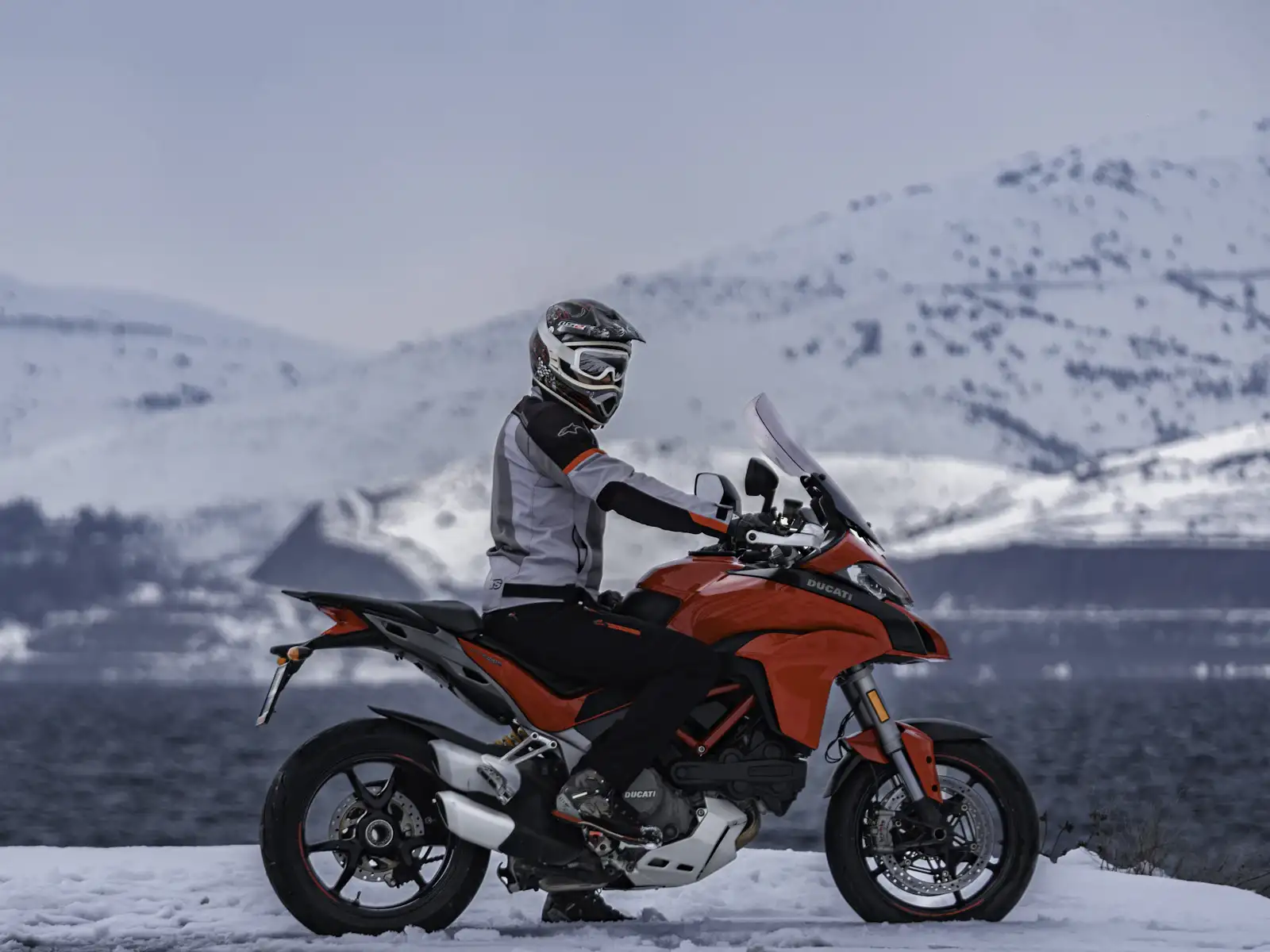
Short answer: a good cold-weather motorcycle jacket should block wind, manage rain, fit correctly over planned layers, retain useful mobility, and provide the protective construction you need for riding. Warmth alone is not enough, and there is no single temperature rating that works for every rider or trip.
Cold air feels more demanding once you are moving. The National Weather Service explains that wind increases heat loss from exposed skin, while the CDC notes that wet clothing and sweat can accelerate chilling. A motorcycle jacket therefore has to work as part of a complete system, not as an isolated winter coat.
1. Wind Resistance Comes First
Insulation cannot do its job if cold air continually enters through the front zipper, cuffs, collar, or waist. Look for a substantial main closure, adjustable cuffs, a collar you can close without restricting head movement, and a waist that seals without riding up. The New Jersey motorcycle manual specifically recommends a wind-resistant winter jacket that fits snugly at the neck, wrists, and waist.
Test those closures in your actual riding position. A jacket that seals while standing may open at the lower back or collar when you reach for the bars.
2. Choose the Right Insulation System
Some winter jackets use a fixed insulated lining; others include a removable thermal liner. A removable liner gives you more control when temperatures change during the day, but it must attach securely and should not bunch around the shoulders or elbows.
Do not buy only by thickness. Bulky insulation can reduce arm movement and make the jacket too tight once you add a base layer. If you expect large temperature swings, a weather-resistant shell with a removable liner is usually easier to adapt than one heavily insulated garment.
3. Treat Waterproofing and Warmth as Separate Jobs
A warm jacket is not automatically waterproof. Check whether the product describes the outer shell, a fixed membrane, or a removable liner as waterproof. Also inspect how the seams and front closure are handled. Our guide to waterproof versus water-resistant motorcycle jackets explains the difference in practical terms.
The CDC advises that sweat and wet clothing can chill the body rapidly. That makes moisture management important even when rain is not expected. An outer layer should limit wind and precipitation while allowing you to adjust ventilation or insulation before perspiration builds up. See the CDC’s cold-weather clothing guidance for the underlying principle.
4. Leave Room for Layers Without Losing Fit
Try the jacket over the exact base and mid-layers you plan to use. You should be able to close every zipper, breathe normally, turn your head, and reach the controls without the sleeves pulling hard across the shoulders. At the same time, the jacket should not become so loose that protective components shift away from their intended positions.
Use the ZARROE size guide and our detailed motorcycle jacket fit guide before choosing a size. Do not automatically size up. Compare your layered measurements with the individual product chart and contact support when you fall between sizes.
Layered fit check
- Wear your normal winter base and mid-layer.
- Close the collar, cuffs, front zipper, and waist adjustment.
- Sit in your normal riding posture and reach both controls.
- Check shoulder movement, elbow bend, back coverage, and breathing room.
- Confirm that any armor remains correctly positioned.
5. Do Not Trade Protection for Warmth
A casual winter coat may feel warm but may not be built for motorcycle abrasion, impact protection, seam strength, or riding posture. Review the jacket’s stated materials, construction, armor provisions, and certifications rather than assuming that heavy leather or a thick lining makes it protective.
Our motorcycle jacket safety-feature guide covers armor placement, closures, seams, and other buying checks. If a product page does not claim a protective standard, do not treat it as certified riding equipment.
6. Compare Leather, Textile, and Shearling Honestly
Leather can provide strong wind resistance and classic riding style, but weather performance, lining, construction, and protective features vary by jacket. Textile jackets often make it easier to combine membranes, vents, adjustments, and removable liners. Explore men’s textile motorcycle jackets when adaptable weather management is a priority.
Shearling provides substantial insulation and a winter-focused look, but not every shearling jacket is protective motorcycle equipment. The ZARROE ZELTOR Winter Leather Jacket is an example of warmth-focused leather and shearling outerwear. Evaluate its listed construction against your riding-protection requirements before using it on a motorcycle.
7. Ventilation Still Matters in Winter
Cold-weather rides can include slow traffic, bright sun, physical effort, and warmer afternoon temperatures. Adjustable vents or a removable liner help you reduce heat before sweat accumulates. Close vents before the temperature drops rather than waiting until you feel chilled.
8. Match the Jacket to the Ride
A short urban commute, a highway tour, and a mountain ride create different exposure. Consider expected temperature, speed, rain, trip duration, available storage, and whether you can stop to change layers. Review the forecast and road conditions before leaving. The National Weather Service’s wind-chill guidance is useful for understanding how wind affects heat loss from exposed skin, but it is not a motorcycle-jacket temperature rating.
You can compare options in ZARROE’s winter riding collection, men’s motorcycle jackets, and women’s motorcycle jackets. Check each product individually because features differ across the collection.
Bottom line: choose a cold-weather motorcycle jacket by balancing wind sealing, moisture control, insulation, layered fit, mobility, and verified protective construction. Test the complete setup on the bike, adjust before you begin sweating or shivering, and postpone the ride when weather or road conditions exceed your preparation.
 New Arrivals
 New Arrivals