


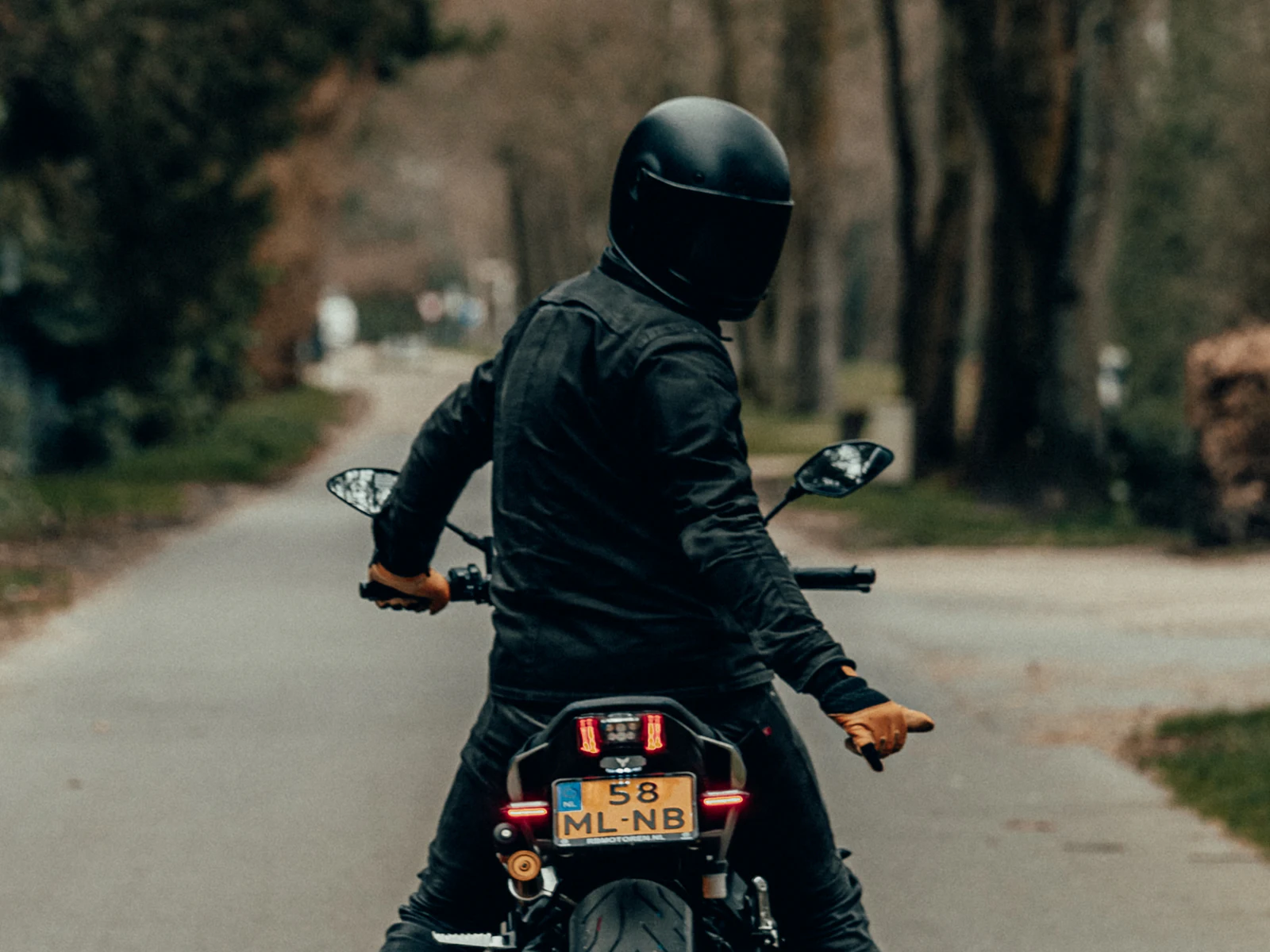
Regular jeans and motorcycle jeans can look similar, but appearance does not establish protection. For riding, choose pants with documented protective performance, correctly positioned armor, and a fit that works on the bike. A heavy denim fabric or an “armor-ready” description alone is not enough to judge the complete garment.
If you commute in jeans, the buying decision is practical: can one pair work on the motorcycle and at your destination? Start with the protective specification, then compare comfort, cut, and convenience. This guide explains what to check before replacing everyday denim with riding jeans.
What makes motorcycle jeans different?
Ordinary fashion jeans are bought for everyday wear. Do not assume they have been tested for motorcycle abrasion, seam strength, or impact protection. Purpose-built riding jeans may use protective fabric, reinforcement, armor pockets, and a riding-oriented cut, but the details vary by model.
The Motorcycle Safety Foundation recommends leather or abrasion-resistant fabrics for motorcycle jackets and pants. The practical takeaway is to assess the whole outfit, rather than putting all your attention into a jacket and treating pants as an afterthought.
- Fabric and reinforcement: Ask what makes the material suitable for riding and where any reinforcement is located.
- Seams and closures: Look for documented garment testing, rather than judging strength by visible stitching alone.
- Armor: Confirm which knee and hip protectors are supplied and which require a separate purchase.
- Fit: Check movement, coverage, and protector placement while seated, not just in front of a mirror.
Check the garment rating separately from the armor
A label referring to EN 17092 concerns the protective garment. SATRA’s explanation of EN 17092 describes clothing classes including AAA, AA, and A, and assessments covering abrasion, seams, tears, and ergonomics. Ask for the exact model’s label and supporting documentation if a listing makes a certification claim.
Knee and hip protectors are a separate check. SATRA’s EN 1621 guidance explains limb-joint impact testing and the Level 1 and Level 2 designations. A certified insert does not establish the abrasion performance of the surrounding denim.
“Armor-ready” means you must check the package contents. Pockets can be present without protectors being supplied. Before ordering, confirm the compatible insert model, its size, and whether both knee and hip armor are included. Compare the total cost of the usable setup, including any required inserts.
Choose the construction around your daily routine
Ask whether the protective material is built into the main fabric or provided by a separate lining, and whether that lining covers the whole garment or selected areas. Do not rank two pairs by the number of layers or a fiber name alone. Compare their documented performance and try the actual garments on.
For commuting, think through your arrival as well as the ride. Will you keep the jeans on at work, or change immediately? Can you sit comfortably at a desk with the armor fitted? If protectors are removable, check how easily you can reinstall them correctly before the return journey.
Explore the ZARROE men’s riding-jeans collection to compare cuts and features. For example, the ZYRON Elite Jeans listing describes stretch denim, articulated knees, and knee and hip armor-ready pockets. Confirm the included protectors and available certification information before choosing your setup.
Try the jeans in your riding position
Use the ZARROE size guide alongside the specific product measurements. If the chart does not provide the pants measurements you need, ask for them before ordering. Your usual fashion-jeans size is a starting point, not a guarantee.
- Wear the underwear and riding boots you plan to use, with the intended armor installed.
- With the motorcycle securely supported and its engine off, sit in your normal riding position.
- Check that the waistband stays comfortable and the seat, thighs, and crotch do not restrict reaching the controls.
- Follow the protector manufacturer’s fitting instructions. Check knee and hip coverage after bending your legs and moving between sitting and standing.
- Look at the hem-to-boot overlap while seated. Avoid a length that leaves a gap or bunches excessively around the controls.
- Check that your jacket overlaps the waistband when you reach forward. Use a garment connection only when the manufacturers specify compatibility.
If the jacket is also due for replacement, compare motorcycle jackets as part of the same outfit. Our jacket safety-features guide explains what to inspect above the waist.
Match the weather without assuming waterproofing
Stretch, reinforcement, and armor pockets do not tell you whether jeans are waterproof. Check the stated weather protection separately. For a wet commute, plan a compatible rain layer and somewhere to dry your gear at the destination.
If you ride in warm conditions, try the jeans with all the protective components fitted. Removing a component to improve comfort changes the setup you assessed. For long trips or frequent rain, compare riding jeans with purpose-built touring pants instead of asking everyday-looking denim to meet every need.
Before-you-buy checklist
- The exact model’s protective claims are supported by clear documentation.
- You know which knee and hip protectors are included.
- The fit works while seated, with your boots and jacket.
- Any reinforcement coverage and care instructions are clear.
- The complete price includes the inserts or weather layers you need.
- You have checked the return conditions before removing tags or riding in the jeans.
Can you add knee armor to regular jeans instead?
Separate protectors address impact protection where they cover the body; they do not turn ordinary denim into a tested protective garment. If you choose an underlayer or separate armor system, follow its compatibility instructions and check both impact and abrasion protection across the complete outfit.
Which should you wear?
For motorcycle use, prioritize riding pants with verifiable protection and a secure, comfortable fit. Choose regular jeans for the off-bike part of your day if you prefer, and change at your destination. When comparing riding jeans, buy the documented specification and the fit you have checked, not the toughest-looking denim or the most reassuring product name.
 New Arrivals
 New Arrivals