


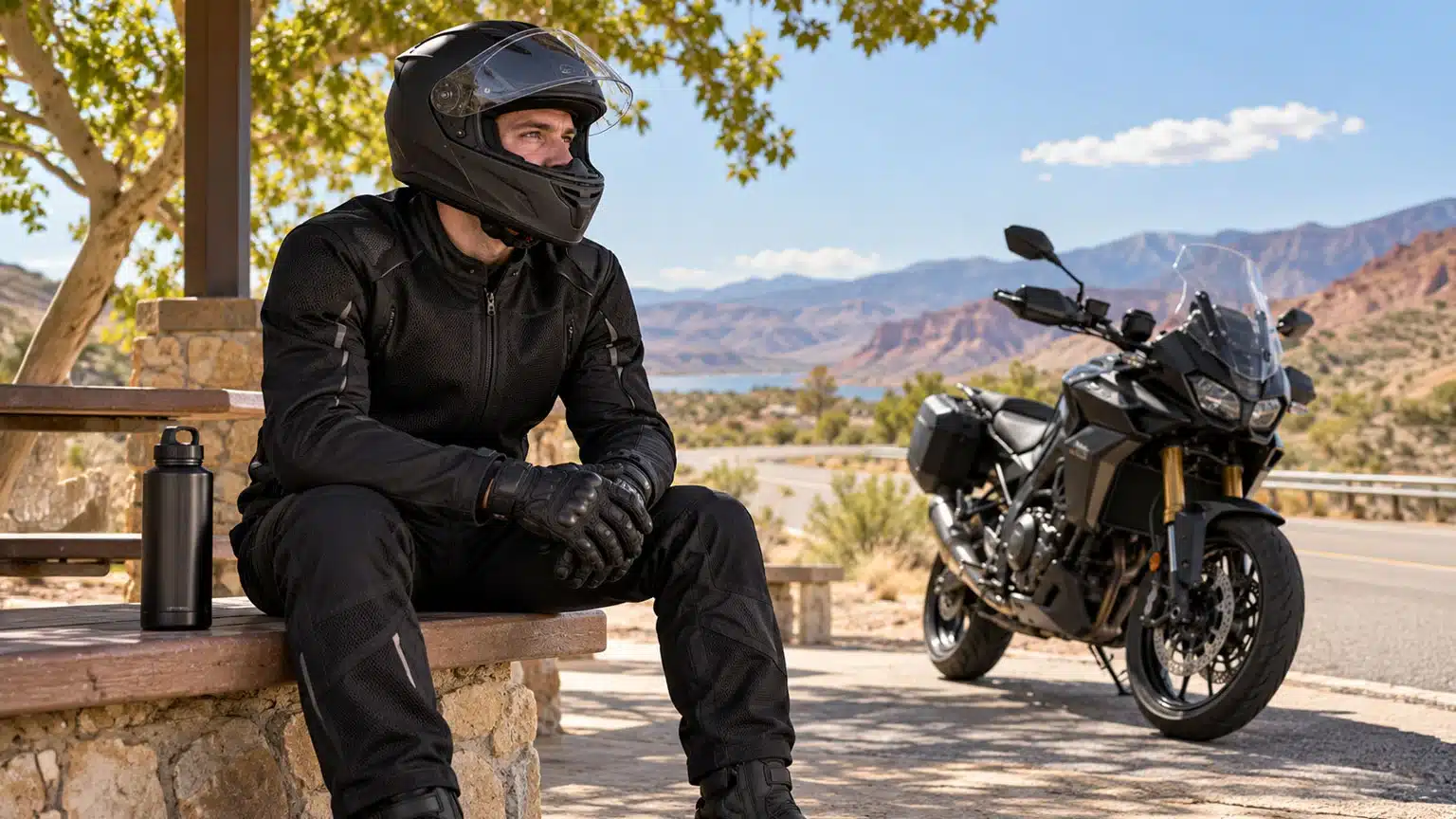
Best Motorcycle Gear for Hot Weather Riding in the USA
The right summer motorcycle gear balances airflow with coverage, fit and verified protection. A mesh jacket may feel cooler than a heavy leather layer, but the material name alone does not tell you how a garment is built or what protection it provides. Use this guide to choose gear for your route, climate and riding time.
Quick answer: For many U.S. summer rides, start with a motorcycle-specific ventilated jacket and pants whose protection details are clearly listed. Add full-finger gloves, ankle-covering boots, a properly certified helmet and a fitted base layer. Then plan your ride around heat, water and cooling breaks—not airflow alone.
Hot-weather riding varies across the United States. A humid city commute, a dry Southwest highway and a mountain route with changing temperatures call for different layers. Begin with the ZARROE Summer Riding collection, then compare the construction and listed features of men’s textile jackets and women’s textile jackets. Choose by the exact product specifications, not the category name alone.
What to wear for hot-weather motorcycle riding
| Gear | Look for in warm weather | Verify before buying |
|---|---|---|
| Jacket | Airflow panels or ventilated construction, adjustable openings and comfortable coverage. | Which protectors are included, shell/reinforcement details, seams, fit and any garment-level rating. |
| Pants | Ventilation that works with your riding position and jacket. | Coverage, abrasion-resistant areas, armor details, fit and jacket connection options. |
| Gloves | Breathable construction without giving up hand and wrist coverage. | Full-finger coverage, secure closure, palm construction and grip feel at the controls. |
| Boots | Comfortable, secure footwear suited to long periods on and off the bike. | That the footwear covers the ankles and fastens securely. |
| Base layer | A close-fitting, lightweight layer that manages sweat under riding gear. | That it does not bunch, restrict movement or push protectors out of position. |
| Helmet and visibility | A comfortable, well-ventilated helmet and visible outer details. | For the U.S., check the helmet’s DOT compliance label; keep vents and closures working as designed. |
1. Choose ventilation without guessing about protection
Airflow is the defining advantage of mesh and other ventilated textile designs. The trade-off is that jackets vary: mesh size, reinforced panels, seams, armor and coverage are model-specific. Check the product page to see whether shoulder and elbow protectors are included, whether a back protector is included or optional, and what the manufacturer states about the shell and tested protection.
Do not treat “mesh,” “summer,” “CE armor” or a back-protector pocket as a complete description of a jacket’s protection. A label may refer to an individual protector rather than the entire garment. Read the exact product documentation and confirm which parts were assessed. The ZARROE Motorcycle Safety Guide offers a related checklist for comparing protection details.
For riders who prefer a shirt-style silhouette, compare the listed construction of motorcycle riding shirts. Do not assume that a casual-looking shirt, a textile jacket and a mesh jacket offer equivalent coverage or protection.
2. Match the jacket to your route and U.S. climate
- Hot, humid commutes: Prioritize generous airflow, manageable weight and a fit that remains secure at the shoulders and elbows. Plan a cooler route or stop if traffic leaves you standing in heat.
- Dry, high-temperature rides: Do not mistake a breeze for protection from heat. Keep skin covered, carry water and schedule breaks in shaded or air-conditioned places.
- Long-distance touring: A ventilated textile jacket with adjustable vents and a removable weather layer may be more adaptable when temperatures, elevation or rain change. Check that the layer is actually included and that it fits without shifting armor.
- Early starts and evening rides: Temperatures and visibility can change quickly. Reflective details and a layer that can be closed securely are useful features to compare.
There is no single best jacket for every rider or every U.S. summer route. The ZARROE Motorcycle Jacket Buying Guide can help you compare intended use, construction and weather features before narrowing down a style.
3. Keep full coverage from head to toe
Skipping protective gear because it feels hot is a poor trade. NHTSA notes that thermal discomfort can lead some motorcyclists to avoid protective clothing in hot weather, and that vented gear is designed to help manage overheating. The practical response is to find gear that you can wear consistently while still checking its coverage and protection details—not to ride in a T-shirt or shorts.
Wear motorcycle pants that cover the legs, full-finger gloves and boots or shoes that cover the ankles and stay secure. If you add a cooling vest or another layer, make sure it is suitable for riding and does not bunch under the jacket or move armor away from its intended position. Review the ZARROE Size Guide and the product-specific chart so the gear fits over the layers you will actually wear.
4. Use base layers and liners carefully
A thin, close-fitting base layer can make sweaty gear easier to put on and take off. Avoid bulky or loose fabric that twists under the jacket or interferes with closures. If you use a cooling vest, follow its care and use instructions; a cooling layer does not replace protective gear or make an unsafe temperature safe.
Removable rain or wind liners add flexibility, but a liner can reduce airflow while it is installed. Check how it attaches and whether it can be stored securely when removed. For hot-weather gear, rely on the listing’s stated liner and ventilation details instead of assuming every textile jacket is waterproof, insulated or highly ventilated.
5. Make fit, visibility and closures part of the comfort check
Try the jacket in riding posture with the base layer and gloves you plan to use. Reach forward, bend your elbows and check that the shoulder and elbow protectors stay centered. Sleeves should not pull high above the wrists, cuffs should fasten over or under your gloves as intended, and the hem should not expose your lower back when you lean forward.
Look for closures you can adjust securely and reflective details visible from more than one direction. NHTSA recommends bright clothing with reflective material to help riders be more visible. A bright or reflective jacket improves visibility; it does not replace sound riding decisions or protective construction.
6. Plan for heat, not just for gear
Check the forecast and heat index before leaving. Whenever possible, ride during cooler parts of the day, plan stops in shaded or air-conditioned places and drink water regularly. CDC/NIOSH heat guidance recommends access to water and rest breaks in heat-exposed settings; for a ride, build those breaks into the route rather than waiting until you feel unwell.
Watch for heat-related symptoms such as headache, dizziness, nausea, weakness, heavy sweating or muscle cramps. Stop somewhere safe, get out of the heat and cool down. Confusion, fainting, seizure or very hot skin can signal a medical emergency; call emergency services. Do not try to push through serious symptoms to reach your destination.
Hot-weather motorcycle gear checklist
- The jacket is designed for motorcycle riding and the product listing explains its ventilation, shell and protection features.
- I know which armor is included, which pieces are optional and where each protector sits.
- The jacket and pants provide coverage in my normal riding position.
- My gloves are full-fingered, my footwear covers the ankles and my helmet’s DOT label is present.
- My base layer and any liner fit without bunching or moving the protectors.
- I have a route, water and cooling-break plan for the heat and humidity expected that day.
The best motorcycle gear for hot weather riding in the USA is the gear that matches your climate and route while keeping coverage, fit and documented protection in view. Compare the listed features of each garment, then plan around the heat as carefully as you plan the ride.
Frequently asked questions
Is a mesh motorcycle jacket the best choice for summer?
Mesh can provide high airflow, which many riders value in hot weather. It is not automatically the best choice for every ride: check the exact jacket’s coverage, armor, reinforcements, seams, fit and weather options.
Can I ride in a T-shirt if it is extremely hot?
A T-shirt does not provide the coverage or motorcycle-specific construction of protective riding gear. Choose ventilated gear and plan cooling breaks rather than leaving your arms and legs exposed.
Are motorcycle riding shirts enough protection in summer?
That depends on the construction and product specifications of the individual shirt. Check its materials, seams, coverage, armor and any stated testing; do not assume a riding shirt is equivalent to a jacket.
What should I do if I feel overheated while riding?
Pull over somewhere safe as soon as possible, move to a cooler place, remove gear while off the bike and drink water if you are alert and able. Seek urgent help for serious symptoms such as confusion, fainting or seizure.
Official safety references
 New Arrivals
 New Arrivals