


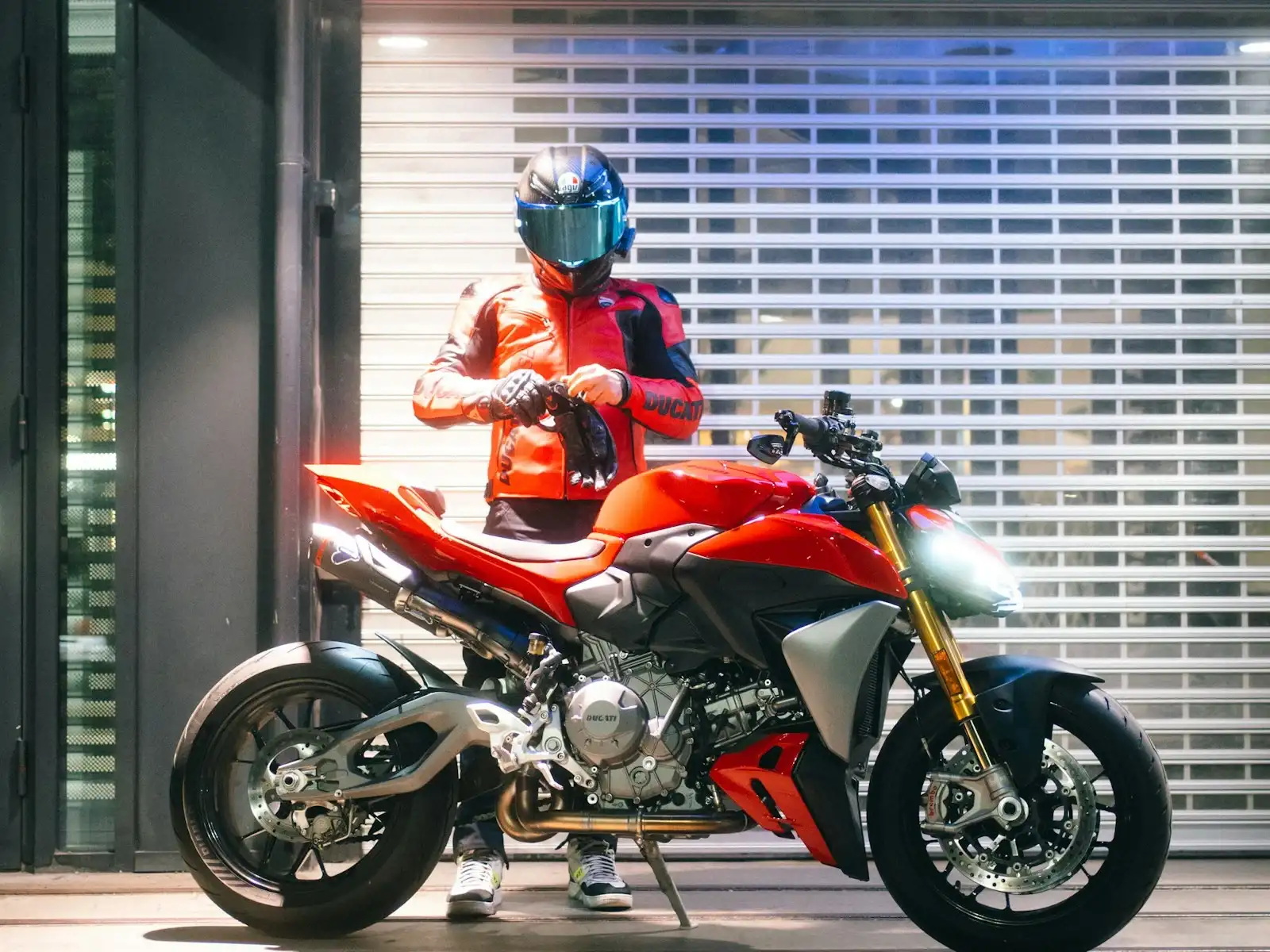
For night riding, choose protective motorcycle gear with bright or contrasting daytime color and retroreflective material that can return headlight illumination toward drivers. Visibility features should supplement a working lighting system, lane positioning, speed control, and active hazard scanning. They cannot make a rider visible from every angle or compensate for unsafe riding.
Motorcycles present a smaller visual target than cars, and judging their speed and distance can be difficult for other road users. The National Highway Traffic Safety Administration recommends brightly colored clothing and white or bright helmets for daytime conspicuity, plus retroreflective materials or devices for nighttime visibility. The Motorcycle Safety Foundation gives similar guidance and notes that reflective vests or tape can improve the visibility of regular gear after dark.
Bright, reflective, and illuminated gear are different
Bright or fluorescent colors rely on available light and contrast with the background. They can be especially noticeable during daylight, dawn, dusk, and overcast conditions, but they do not glow by themselves in darkness.
Retroreflective material returns incoming light toward its source. When vehicle headlights strike it, reflective panels, piping, or tape can appear much brighter to the driver near those headlights. Its effect depends on the angle, cleanliness, condition, and placement of the material.
Active lights use their own power source. Helmet or wearable lights may be regulated differently by state and can create confusion if their colors or flashing patterns resemble emergency signals. Check local law and the equipment manufacturer’s instructions before using them.
Visibility features to look for in a motorcycle jacket
- Coverage from several directions. Reflective details on the chest, upper back, shoulders, and sleeves can be seen from more approaches than one small rear logo.
- Movement cues. Reflective areas on moving arms can help another road user recognize a human rider rather than a stationary object.
- Useful color contrast. A panel should stand apart from the surrounding jacket and road environment instead of disappearing into an all-dark silhouette.
- Unobstructed placement. A backpack, vest, rain shell, or passenger should not cover the only reflective area.
- Protective construction first. Visibility details do not replace abrasion-resistant material, secure closures, correct armor position, or a safe fit.
Use the motorcycle jacket safety-features guide to evaluate the entire garment rather than choosing a jacket only because it has reflective trim.
Can you add a reflective vest over a jacket?
A purpose-made high-visibility motorcycle vest can be a practical option when your main jacket is dark. It should fit close enough to avoid flapping but must not restrict shoulder movement, interfere with the jacket’s closures, cover ventilation you need, or displace protectors. If an airbag system is involved, use only the layering arrangement approved by its manufacturer.
Check the vest in your actual riding position and confirm that it remains visible when you wear a backpack or sit behind a windscreen. A loose construction-worker vest is not automatically suitable for highway wind. Secure fit, durable fasteners, and adequate front-and-back coverage matter.
What if you prefer black motorcycle gear?
You do not necessarily need to replace every dark garment. Consider an appropriately fitted reflective over-vest, manufacturer-approved reflective decals, contrasting helmet graphics, or reflective details on boots and gloves. The Motorcycle Safety Foundation specifically suggests reflective strips or decals on clothing and the motorcycle, and its rider guidance also mentions the backs of boots.
Do not place adhesive tape over seams, vents, labels, impact protectors, stretch panels, or areas that must flex sharply. Test any adhesive on an inconspicuous area and follow the garment maker’s instructions, because some adhesives can mark leather or coated textiles.
Fit still affects nighttime performance
A reflective jacket is not useful if it restricts control movement or allows armor to shift. Reach for the handlebars, turn your head, bend your elbows, and check the jacket with your normal base layers. The cuffs should work with your gloves, and the collar should not interfere with the helmet.
Review the complete motorcycle jacket fit guide before comparing men’s motorcycle jackets or women’s motorcycle jackets.
Rain, fog, and cold change the equation
Low light combined with rain or road spray can reduce contrast and cover reflective surfaces with dirt. Choose outer layers that preserve visibility when worn over the main jacket, and clean reflective panels according to the care label. Never assume a small reflective logo remains effective when it is wet, folded, or hidden.
Cold can also reduce comfort and concentration. Add layers without making the jacket too tight, and remember that an outer rain shell may hide the visibility features beneath it. Compare waterproof and water-resistant motorcycle jackets and the cold-weather motorcycle jacket guide when planning for longer fall or winter rides.
Pre-ride visibility checklist
- Clean the helmet visor, headlight, brake light, turn signals, and reflective surfaces.
- Confirm your outermost layer still shows reflective or contrasting areas.
- Check that luggage, a backpack, or a passenger does not cover the rear visibility panel.
- Test all lights before leaving and carry a backup plan for equipment failure.
- Use lane positions that help other drivers see you, while preserving space for hazards.
- Reduce speed so you can stop within the distance you can clearly see.
The practical answer
For riding after dark, combine protective apparel with bright contrast and well-placed retroreflective material, then keep the reflective areas clean and uncovered. Treat visibility gear as one layer of a larger strategy that includes working lights, careful positioning, more following distance, and a speed appropriate for the illuminated road ahead.
Safety references: NHTSA motorcycle conspicuity guidance, Motorcycle Safety Foundation protective-gear guidance, and the MSF Motorcycle Operator Manual.
 New Arrivals
 New Arrivals