


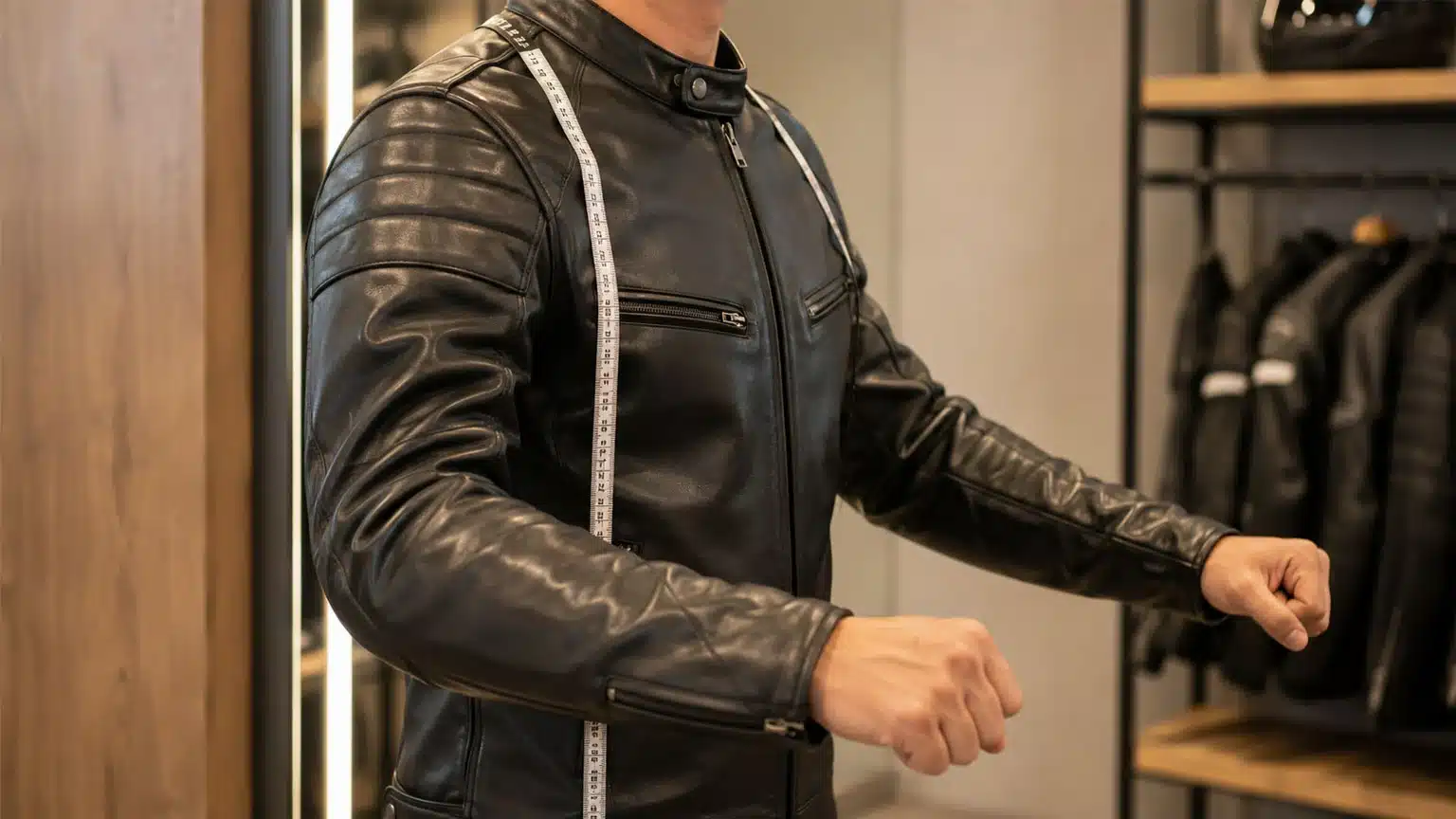
Motorcycle Jacket Sizing Guide: Does It Run Small or Large?
“Does this jacket run small or large?” is one of the most searched questions in motorcycle gear shopping, and for good reason — there’s no universal sizing standard across motorcycle jacket brands the way there is with, say, men’s dress shirts. A size Large from one brand can fit like a Medium from another, and even two jackets from the same brand can fit differently depending on the cut (slim cafe racer vs. roomy touring). This guide explains why that happens and how to size yourself correctly regardless of the brand.
Quick Answer
Motorcycle jackets generally run closer to true-to-size or slightly snug compared to regular streetwear, because they’re designed to fit tightly enough to keep armor in place without excess fabric — but this varies significantly by brand and cut. Race-inspired and cafe racer styles tend to run small/slim through the torso, while touring and adventure jackets designed for layering tend to run larger/roomier. The only reliable way to size correctly is to measure your actual body (chest, waist, arm length, shoulder width) and compare it against each brand’s specific size chart — never rely on your regular clothing size alone.
Why Motorcycle Jacket Sizing Varies So Much
1. There’s no industry-wide sizing standard. Unlike shoe sizing (which has rough international standards) or dress shirts (neck/sleeve measurements), motorcycle jacket sizing is set individually by each brand. A “Large” is whatever that brand decides it is.
2. Cut differs by riding style. A cafe racer or sport jacket is deliberately cut slim and close to the body for aerodynamics and a sportier look — this cut will feel tighter than your regular size. A touring or adventure jacket is cut roomier to fit over base layers, thermal liners, or a back protector — this cut will feel looser than your regular size in the same labeled size.
3. Material affects fit differently. Leather stretches and molds to your body over the first several wears, so a snug initial fit is intentional and expected. Textile doesn’t stretch the same way, so textile jackets are generally sized to fit comfortably from day one rather than needing a break-in period.
4. Regional sizing conventions differ. European brands often run smaller/slimmer through the torso compared to American brands, and Asian sizing conventions can run smaller still. Always check whether a size chart uses US, EU, or UK conventions before ordering.
How to Measure Yourself Correctly
Skip the guesswork and take these four measurements before comparing against any brand’s size chart:
- Chest — measure around the fullest part of your chest, under your arms, keeping the tape level around your body.
- Waist — measure around your natural waistline, where you’d wear pants.
- Shoulder width — measure from the edge of one shoulder to the other, across your back.
- Arm length (sleeve) — measure from the top of your shoulder to your wrist bone, with your arm slightly bent (this matches your riding position better than a straight-arm measurement).
Write these down and keep them — you’ll reuse them every time you shop for gear, regardless of brand.
Matching Your Measurements to a Size Chart
Once you have your measurements, compare them against the specific brand’s chart — not a generic size chart, and not your usual clothing size. A few rules of thumb:
- If your chest measurement falls between two sizes, size up if you plan to wear the jacket over a base layer, hoodie, or in cold weather; size down (or true to size) if you want a closer, sportier fit.
- If your shoulder width is proportionally wider than your chest, prioritize the shoulder fit over the chest fit — a jacket that’s tight across the shoulders will restrict your riding position no matter how well it fits everywhere else.
- If you’re buying leather, lean toward the snugger of two sizes, since leather will relax and mold to your body with wear. If you’re buying textile, size according to your measurements without expecting stretch.
Sizing by Body Type
| Body Type | What to Watch For | Sizing Tip |
|---|---|---|
| Athletic/broad-shouldered | Standard charts may run tight across the shoulders/back even if the chest size is correct | Prioritize the shoulder measurement; consider sizing up if between sizes |
| Slim/lean build | Standard sizing can leave excess fabric at the waist and underarms | Look for slim-cut or cafe racer-style jackets specifically, or consider a brand with a tapered cut |
| Broad chest/waist proportion | A size that fits the chest may be tight at the waist, or vice versa | Check if the brand offers adjustable waist straps/belts, common on many jackets for exactly this reason |
| Tall/long-limbed | Standard sizing may leave sleeves too short, exposing the wrist when arms are extended | Check sleeve length specifically in the size chart, not just chest size; some brands offer “tall” or “long” fits |
| Petite/shorter frame | Standard men’s or unisex sizing often runs too long in the torso and sleeves | Look for women’s-specific or petite-cut options where available, rather than sizing down in a unisex cut |
Common “Runs Small/Large” Patterns by Jacket Style
While this varies by individual brand, these general patterns hold across most of the market:
- Cafe racer and sport-style jackets — tend to run small/slim, since they’re built for a close, aerodynamic fit. Consider sizing up if you plan to wear any layers underneath.
- Cruiser jackets — tend to run true to size to slightly roomy, built to move comfortably with a laid-back riding position.
- Touring and adventure jackets — tend to run large/roomy, since they’re designed to fit over base layers and thermal liners. Many riders size down from their usual size when buying touring gear for this reason.
- Bomber-style jackets — tend to run closest to standard streetwear sizing, since they’re less technical in cut than dedicated riding gear.
- Club/vest-style gear — fit is often prioritized around the back panel (for patches) rather than a close body fit, so these can run roomier through the torso by design.
Sizing Mistakes to Avoid
- Don’t rely on your usual clothing size. A size Large t-shirt doesn’t mean you’re a size Large motorcycle jacket — always check the brand’s specific chart.
- Don’t size based on standing posture alone. Try the jacket on (or size based on measurements) in a riding position — arms bent forward — since that’s how you’ll actually wear it.
- Don’t oversize “to be safe.” Excess fabric flaps at speed and can shift armor out of position in a slide. If you’re between sizes and unsure, sizing down slightly is usually safer than sizing up, especially for leather that will stretch.
- Don’t ignore sleeve length. A jacket that fits well in the chest but has short sleeves will ride up on the bike and expose your wrists — check this measurement specifically.
Frequently Asked Questions
Do motorcycle jackets run small or large compared to regular clothing sizes? It depends on the brand and cut, but generally motorcycle jackets fit closer to the body than casual clothing in the same labeled size, since they’re designed to keep armor positioned correctly. Sport and cafe racer styles tend to run small/slim; touring and adventure jackets built for layering tend to run larger/roomier.
Should I size up if I’m between two sizes? It depends on your intended use. Size up if you plan to layer underneath the jacket in cold weather. Size down, or stay true to size, if you want a closer sport/cafe racer fit, or if you’re buying leather, since it will stretch and mold to your body over time.
How do I know if a motorcycle jacket fits correctly? It should sit snug through the shoulders and chest with minimal excess fabric, allow full arm mobility when you mimic a riding position (arms bent forward), and have sleeves that still reach your wrist with your arms extended. A properly fitted jacket often feels slightly snug when standing straight but comfortable in an actual riding posture.
Is leather jacket sizing different from textile jacket sizing? Yes. Leather stretches and breaks in over time, so it’s typically sized slightly snug on purchase. Textile doesn’t stretch the same way, so it should fit comfortably from the first wear without expecting it to loosen.
Why do different brands have such different size charts for the same labeled size? There’s no universal industry standard for motorcycle jacket sizing — each brand sets its own measurements based on its target cut and riding style. This is why comparing your actual body measurements against each brand’s specific chart matters more than relying on your usual size.
Not sure which size is right for you? Check ZARROE’s detailed size guide for exact measurements on every jacket in our collection, or read our buying for a full breakdown of how a motorcycle jacket should fit.
 New Arrivals
 New Arrivals